
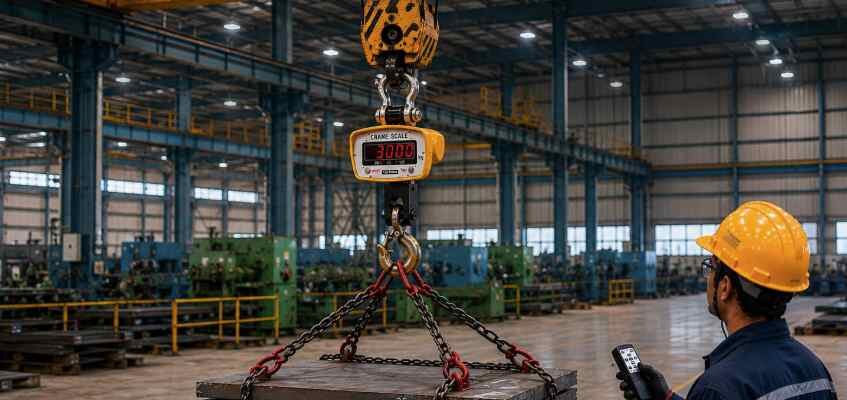
Weighing heavy, oversized cargo and raw materials presents unique safety and logistics challenges in heavy industry. Moving bulky loads to stationary ground scales wastes valuable time and increases workplace hazards.
To simplify overhead weighing while maintaining rigorous safety standards, using a heavy-duty industrial crane scale allows operators to measure massive loads directly during the lifting process.
Key Operational Advantages of Overhead Weighing
Suspended weighing systems combine load-lifting and weight measurement into a single efficient step for industrial yards and factories.
- Workflow Efficiency: Weighs materials in transit without requiring dedicated ground scale stops.
- Overload Prevention: Alerts operators immediately if crane lifting limits are exceeded.
- Space Optimization: Eliminates the need for large floor scales in crowded work areas.
- Remote Operation: Wireless handheld displays keep operators at a safe viewing distance.
- Heavy-Duty Durability: Built with rugged cast-alloy housings to withstand harsh environments.
Primary Industrial Applications for Crane Scales
These robust overhead instruments are built to perform reliably across some of the most demanding commercial sectors.
-
Foundries and Steel Manufacturing
Metal production facilities rely on crane scales to measure molten scrap, raw coils, and steel beams during transport. Rugged heat-shielded designs ensure consistent accuracy even when working near extreme furnace temperatures.
-
Shipping Ports and Freight Terminals
Cargo terminals must verify container and freight weights to comply with international maritime safety standards. Suspended scales allow crane operators to confirm cargo weight quickly before loading containers onto vessels or transport trucks.
-
Construction and Heavy Equipment Handling
Building sites utilize crane scales to balance suspended loads, monitor structural material weights, and prevent crane tipping hazards during high-altitude lifting tasks.
Conclusion
Choosing the right unit begins with determining your maximum anticipated load and required safety factor margins. Always select a capacity that comfortably exceeds your heaviest regular lifts to avoid structural fatigue on hooks and shackles.
Look for bright LED displays and wireless remote control options that enable clear readouts from ground level. Investing in a certified overhead scale protects personnel, prevents equipment damage, and streamlines heavy material logistics.